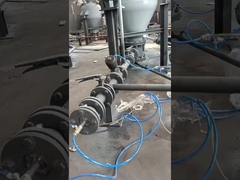
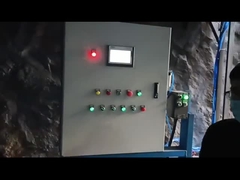
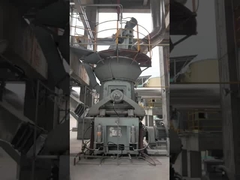
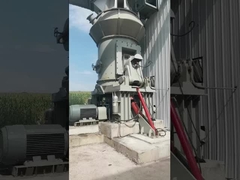
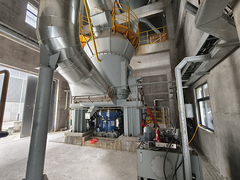
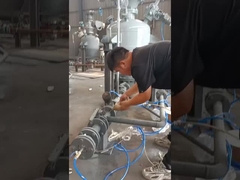
Brief: Saksikan bagaimana Pompa Jet Fase Encer Tekanan Positif Tipe PJP secara efisien mengangkut bahan bubuk dan granular dalam demonstrasi terperinci ini. Pelajari tentang desainnya yang ringkas, kontrol otomatis, dan pengoperasian tanpa debu di lingkungan industri.
Related Product Features:
Compact structure with reliable performance and simple maintenance for long service life.
Low-pressure, dilute phase continuous pneumatic conveying for powder and granular materials.
Automatic control system with moving parts consisting only of materials and air.
Fully enclosed system design that connects to dust removal for a dust-free environment.
Low investment cost with versatile application across building materials, chemicals, and power industries.
Handles conveying volumes from 1 to 9 T/H with material pipe diameters from 3 to 6.
Operates using compressed air from Roots blower for energy-efficient material transport.
Suitable for medium conveying distances and situations where conveying volume is not large.
Pertanyaan:
What is the operational principle of the PJP Type Jet Pump?
The PJP jet pump uses compressed air passing through a nozzle to create high-speed airflow, generating negative pressure that mixes with materials. The mixture then passes through an expansion pipe where kinetic energy converts to static pressure, conveying materials through the pipeline to the terminal.
What industries is this pneumatic conveying jet pump suitable for?
It is widely used in building materials, chemicals, electricity, grain, metallurgy, and casting industries for materials like cement, fly ash, hydrated lime, slag powder, coal powder, and various other powders.
How does the conveying capacity vary in different installation scenarios?
When installed at the bottom of a silo, conveying capacity depends on the material height in the silo. When equipped with a locking device, the capacity depends on the locking capacity of that device.